Uterine fibroid embolization: principle, results and risks
Uterine artery embolization is a minimally invasive treatment for symptomatic uterine fibroids. It aims to reduce bleeding, pain and symptoms related to the size of the fibroids, while preserving the uterus. It is an alternative to surgery, but it is not suitable for every patient.
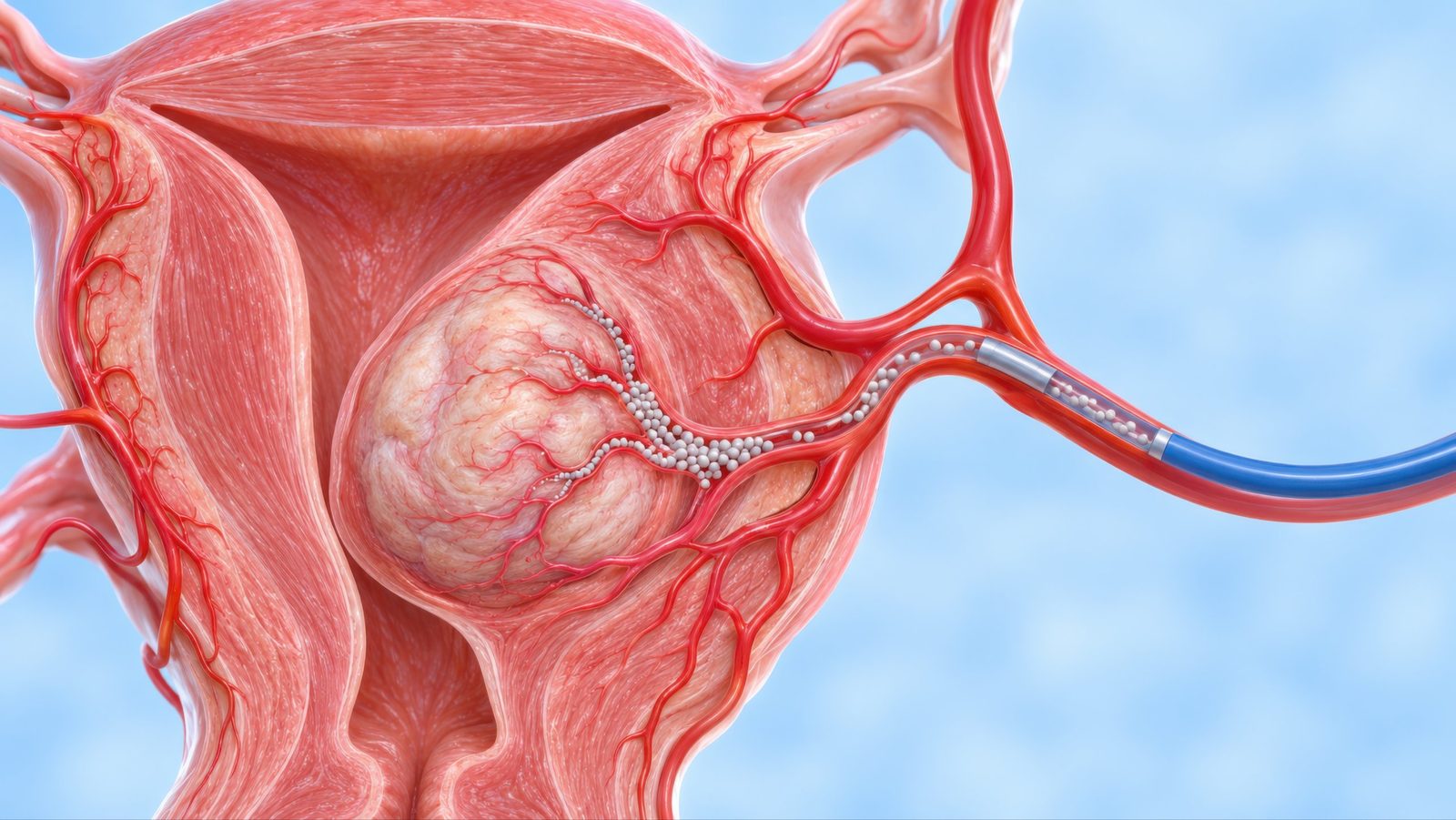
The principle consists of injecting beads of a predefined diameter (500 to 700 microns and/or 700 to 900 microns) into the distal part of the uterine arteries, so as to block more specifically the arteries supplying the fibroids in order to destroy them.
It is a vascular procedure performed in a specialized setting, under sedation or, more specifically, under short general anesthesia. It can be done as an outpatient procedure, but Dr Guilhem Seban recommends a one- or two-day hospital stay to manage any post-procedure pain. Complications are possible; the main benefits are a quick recovery, a short hospital stay and above all preservation of the uterus by avoiding surgery.
What is a uterine fibroid?
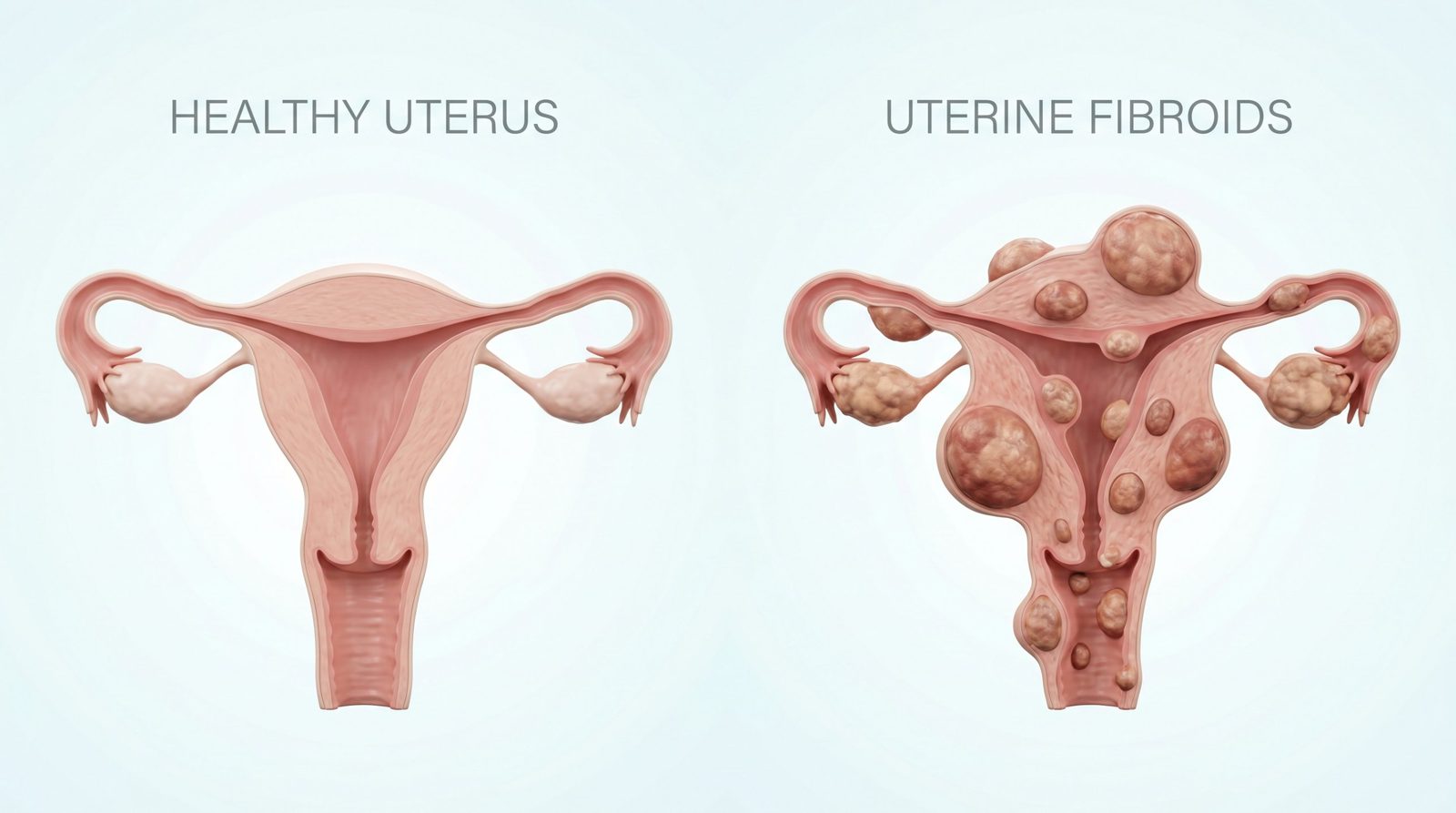
Fibroids, also called myomas or leiomyomas, are benign tumors that develop from the muscle of the uterus. They may be single or multiple, small or large. Most cause no symptoms. When they are troublesome, they can cause:
- very heavy or prolonged periods;
- anemia due to blood loss;
- pelvic or lower back pain;
- a feeling of heaviness or pressure in the lower abdomen;
- frequent urges to urinate or constipation due to compression;
- an increase in abdominal volume;
- sometimes, difficulty conceiving or carrying a pregnancy.
The decision to treat depends mainly on the symptoms, their impact, the size and location of the fibroids, age and any wish for pregnancy. Asymptomatic fibroids generally do not require treatment but can be monitored.
What is the role of embolization in treating fibroids?
Fibroid treatments fall into three main categories:
- medical treatments, which reduce bleeding or correct anemia but generally do not eliminate the fibroids;
- surgical treatments, in particular myomectomy, which removes the fibroids, and hysterectomy, which removes the uterus;
- minimally invasive radiological treatments, including uterine artery embolization.
The position statement of the European Menopause and Andropause Society (EMAS), published in 2014, recommends choosing the treatment according to the size and location of the fibroids, the severity of the symptoms, the wish for pregnancy, the expected effectiveness and the risk of needing a further procedure later (Maturitas).
Embolization is particularly discussed for women who:
- have symptomatic fibroids;
- wish to avoid abdominal surgery;
- wish to keep their uterus;
- do not respond sufficiently to medical treatments or do not tolerate them;
- have several fibroids, where surgical removal would be complex.
It is not simply a “better” alternative to surgery: it offers a faster recovery, but carries a higher risk of a further procedure in the medium to long term.
How does the embolization take place?
The procedure is performed by a vascular surgeon or an interventional radiologist, in collaboration with the gynecologist. Before the procedure, an assessment establishes the number, size and location of the fibroids, their blood supply, the general condition of the uterus and the possible presence of adenomyosis or another cause of symptoms.
Ultrasound is generally the initial examination. A pelvic MRI is often useful when the fibroids need to be mapped in detail or when the choice of treatment remains uncertain: it can change the diagnosis or the treatment plan in about 20% of the symptomatic patients studied in the European Society of Urogenital Radiology guidelines (European Radiology).
The radiologist inserts a small catheter into an artery, most often through the wrist or the groin, then guides it to the uterine arteries. Small biocompatible particles are then injected to reduce the blood flow to the fibroids. The fibroids become ischemic and then gradually shrink, while the healthy uterine muscle usually recovers its blood supply (New England Journal of Medicine).
The procedure is performed under sedation or short general anesthesia, with appropriate pain relief. Dr Seban recommends a one- or two-day hospital stay.
Results, comparisons and risks
What results can be expected?
Embolization generally improves symptoms: periods become lighter, pain and the sensation of pressure decrease, the volume of the fibroids and of the uterus gradually shrinks, and quality of life improves.
A meta-analysis by Toor et al. covering 54 series and 8,159 patients reported symptom improvement in 78% to 90% of patients, with a major complication rate of 2.9% and a reintervention rate of about 5.3% per year of follow-up; these figures varied with the length of follow-up and the studies included (American Journal of Roentgenology).
The benefits are often lasting, but a fibroid can persist, regrow or become symptomatic again. A new embolization, a myomectomy or a hysterectomy may then be proposed.
Embolization or myomectomy?
Myomectomy consists of directly removing the fibroids while preserving the uterus. It can be performed by hysteroscopy, laparoscopy or open surgery, depending on the location and number of the fibroids.
In the randomized FEMME trial (Manyonda et al., 2020), the improvement in quality of life at 2 years was slightly greater after myomectomy than after embolization: mean score of 84.6 versus 80.0; the adjusted difference was 6.5 points with imputation of missing data (95% confidence interval 1.1 to 11.9). On the other hand, embolization was associated with a faster recovery and a shorter hospital stay (New England Journal of Medicine).
The meta-analysis by Tzanis et al. (2024), which included 6 randomized trials, found little or no overall difference in quality of life between embolization and myomectomy, but a lower likelihood of a further procedure after myomectomy: relative risk of 0.32 (95% confidence interval 0.15 to 0.69). The overall certainty of the evidence was, however, very low and the results depended on the studies included (American Journal of Obstetrics and Gynecology).
| Situation | Option often preferred |
|---|---|
| Significant symptoms, wish to avoid surgery | Embolization to be discussed |
| Submucosal fibroid accessible by hysteroscopy | Hysteroscopic myomectomy |
| Wish for pregnancy soon or fertility difficulties | Myomectomy generally preferred |
| Several fibroids or a uterus with many fibroids | Embolization or surgery depending on imaging |
| No wish to preserve the uterus | Hysterectomy, a definitive treatment |
What role in case of a wish for pregnancy?
The uterus is preserved after embolization, but this does not mean that fertility and pregnancy are equivalent to those seen after myomectomy.
The available data are difficult to interpret, because women treated by embolization are often older, have more fibroids or already have other factors that may reduce fertility. Several guidelines remain cautious and generally do not propose embolization as a first treatment for women who wish to become pregnant.
In the meta-analysis by Yan et al. (2023, 15 studies), embolization was associated with a lower pregnancy rate than the comparator treatments (relative risk 0.721) and with more postpartum hemorrhage (relative risk 3.182). Most of the data came from observational studies, which limits the certainty of these results (Frontiers in Medicine).
A pregnancy after embolization remains possible, but the plan should be discussed before the procedure with a gynecologist, a vascular surgeon or an interventional radiologist and, if necessary, a fertility specialist. Myomectomy is generally preferred when the main goal is to improve the chances of pregnancy.
What are the side effects and risks?
Pelvic pain is common in the first hours. It may be accompanied by nausea, fatigue, a slight fever or malaise: this is post-embolization syndrome. These symptoms are usually temporary and controlled with appropriate medication.
Other complications are possible:
- infection of the uterus;
- prolonged vaginal discharge;
- expulsion through the vagina of a fragment of necrotic fibroid;
- hematoma at the puncture site;
- damage to the ovarian blood supply;
- menstrual disturbances, or even permanent cessation of periods, especially in older women;
- partial or complete failure of the embolization;
- need for a further procedure.
A foul-smelling vaginal discharge, persistent fever, worsening pain, heavy bleeding or malaise should prompt you to contact the medical team quickly.
For whom is embolization not always suitable?
The decision must be particularly cautious in case of:
- a wish for pregnancy in the short term;
- an ongoing pelvic infection;
- a fibroid that is already very necrotic or poorly vascularized;
- a cervical or pedunculated fibroid, depending on its anatomy;
- suspicion of another uterine disease;
- a very large uterus or fibroids whose location makes the result uncertain.
The presence of adenomyosis, a large blood supply through the ovarian arteries or a degenerated fibroid may change the strategy and the chances of success (European Radiology).
In summary
Uterine artery embolization is an effective, minimally invasive option for treating fibroids that cause bleeding, pain or compression symptoms. It generally allows a faster recovery than surgery and preserves the uterus. In return, it may require a further procedure and is generally not the first choice when pregnancy is desired.
Key points
Embolization is best suited to patients with symptomatic fibroids who wish to avoid surgery while keeping their uterus, with no immediate plan for pregnancy. The final choice rests on imaging, symptoms, age, reproductive plans and acceptance of the risk of a further procedure, after discussion between the gynecologist and the vascular surgeon or interventional radiologist.
The comparative data at a glance
| Study | Population and comparison | Main result |
|---|---|---|
| Manyonda et al., FEMME randomized trial, 2020 | 254 women: embolization versus myomectomy | Slightly better quality of life after myomectomy at 2 years; faster recovery after embolization. (NEJM) |
| Tzanis et al., meta-analysis of 6 randomized trials, 2024 | Premenopausal women: embolization versus myomectomy | Overall comparable quality of life; fewer reinterventions after myomectomy, relative risk 0.32. (AJOG) |
| Toor et al., meta-analysis of 54 series, 2012 | 8,159 patients treated by embolization | Symptom improvement in 78% to 90%; major complications 2.9%. (AJR) |
| Yan et al., systematic review of 15 studies, 2023 | Fertility and pregnancy after embolization | Lower pregnancy rate and increased risk of postpartum hemorrhage in comparative studies, with limited certainty. (Frontiers in Medicine) |
Learn more
To explore related topics:
Scientific references
- F.R. Pérez-López. EMAS position statement: Management of uterine fibroids. Maturitas, 2014. doi:10.1016/j.maturitas.2014.06.002
- R.A. Kubik-Huch et al. European Society of Urogenital Radiology (ESUR) Guidelines: MR Imaging of Leiomyomas. European Radiology, 2018. doi:10.1007/s00330-017-5157-5
- I. Manyonda et al. Uterine-Artery Embolization or Myomectomy for Uterine Fibroids. New England Journal of Medicine, 2020. doi:10.1056/nejmoa1914735
- S.S. Toor et al. Complication Rates and Effectiveness of Uterine Artery Embolization in the Treatment of Symptomatic Leiomyomas: A Systematic Review and Meta-Analysis. American Journal of Roentgenology, 2012. doi:10.2214/ajr.11.8362
- A.A. Tzanis et al. Uterine artery embolization vs myomectomy for the management of women with uterine leiomyomas: a systematic review and meta-analysis. American Journal of Obstetrics and Gynecology, 2024. doi:10.1016/j.ajog.2024.01.014
- X. Yan et al. Pregnancy rate and outcomes after uterine artery embolization for women: a systematic review and meta-analysis with trial sequential analysis. Frontiers in Medicine, 2023. doi:10.3389/fmed.2023.1283279
See a vascular surgeon
Dr Seban sees patients at the Hôpital Privé Pays de Savoie
19 avenue Pierre Mendès France, 74100 Annemasse.
Video consultations are also available.
A specialized opinion to choose the treatment for your fibroids
Heavy periods, pelvic pain or a feeling of heaviness should not be dismissed. The choice between embolization, myomectomy and other options rests on imaging, your symptoms, your age and your plans for pregnancy.