
Splenic artery aneurysm: diagnosis and treatment
A splenic artery aneurysm is an abnormal, localized dilation of the artery that supplies the spleen. It is often discovered incidentally on an ultrasound or CT scan. Depending on its size, its evolution, its symptoms and the context, simple radiological surveillance may be proposed, whereas treatment is recommended when the risk of rupture is high.
Dr Guilhem Seban, vascular surgeon at the Pays de Savoie Private Hospital (Annemasse), recommends endovascular treatment by embolization in women of childbearing age.
What is a splenic artery aneurysm?
A splenic artery aneurysm is most often discovered by chance. However, it can sometimes cause:
- pain in the upper abdomen;
- gastrointestinal bleeding;
- in case of rupture, sudden pain with faintness and shock.
Any intense, sudden abdominal pain, especially with faintness, pallor or loss of consciousness, is a medical emergency.
Monitor or treat: how is the decision made?
Diagnosis and risk assessment rely mainly on CT angiography.
Depending on the size of the aneurysm, its evolution, its symptoms, its location and the context (in particular pregnancy, a plan to become pregnant, or a pseudoaneurysm), two approaches are possible:
- radiological surveillance;
- treatment, recommended when the risk of rupture is high.
What the professional societies recommend
The guidelines of the Society for Vascular Surgery (2020) and the European Association for the Study of the Liver (2025) recommend treating a symptomatic splenic aneurysm. The EASL also recommends intervention regardless of size in women of childbearing age. An endovascular approach is preferred when the anatomy allows, but a distal or hilar lesion may justify open surgery (EASL, Journal of Hepatology, 2025; SVS, Journal of Vascular Surgery, 2020).
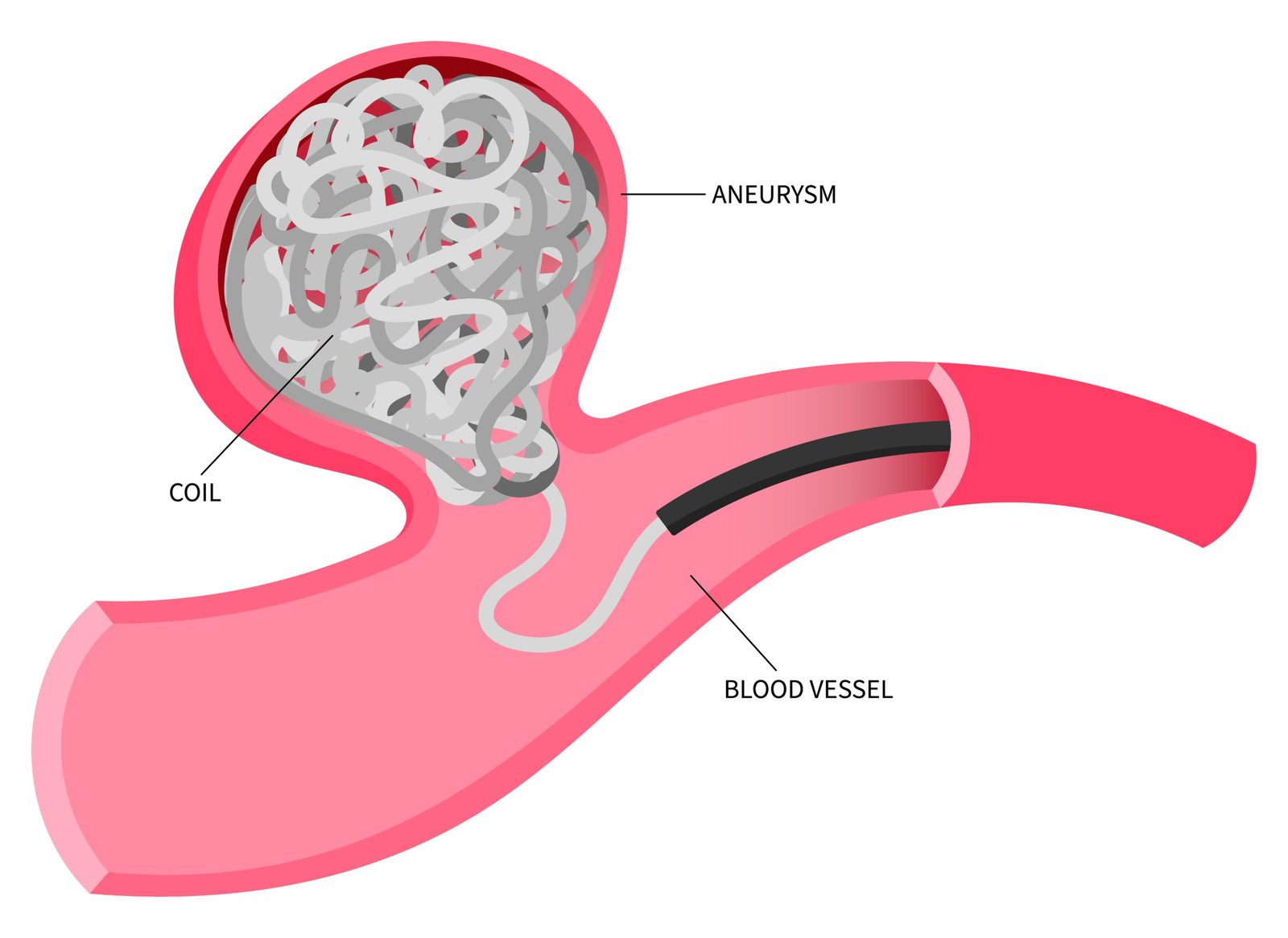
Endovascular treatment: excluding the aneurysm from the circulation
When the anatomy allows, endovascular treatment is generally preferred. It consists of excluding the aneurysm from the circulation, either by embolization (placing coils in the aneurysm) or by placing a covered stent.
Dr Guilhem Seban, vascular surgeon at the Pays de Savoie Private Hospital (HPPS), recommends endovascular treatment by embolization of splenic artery aneurysms in women of childbearing age.
Open surgery may be necessary in case of rupture, a particular location, or when endovascular treatment is not possible.
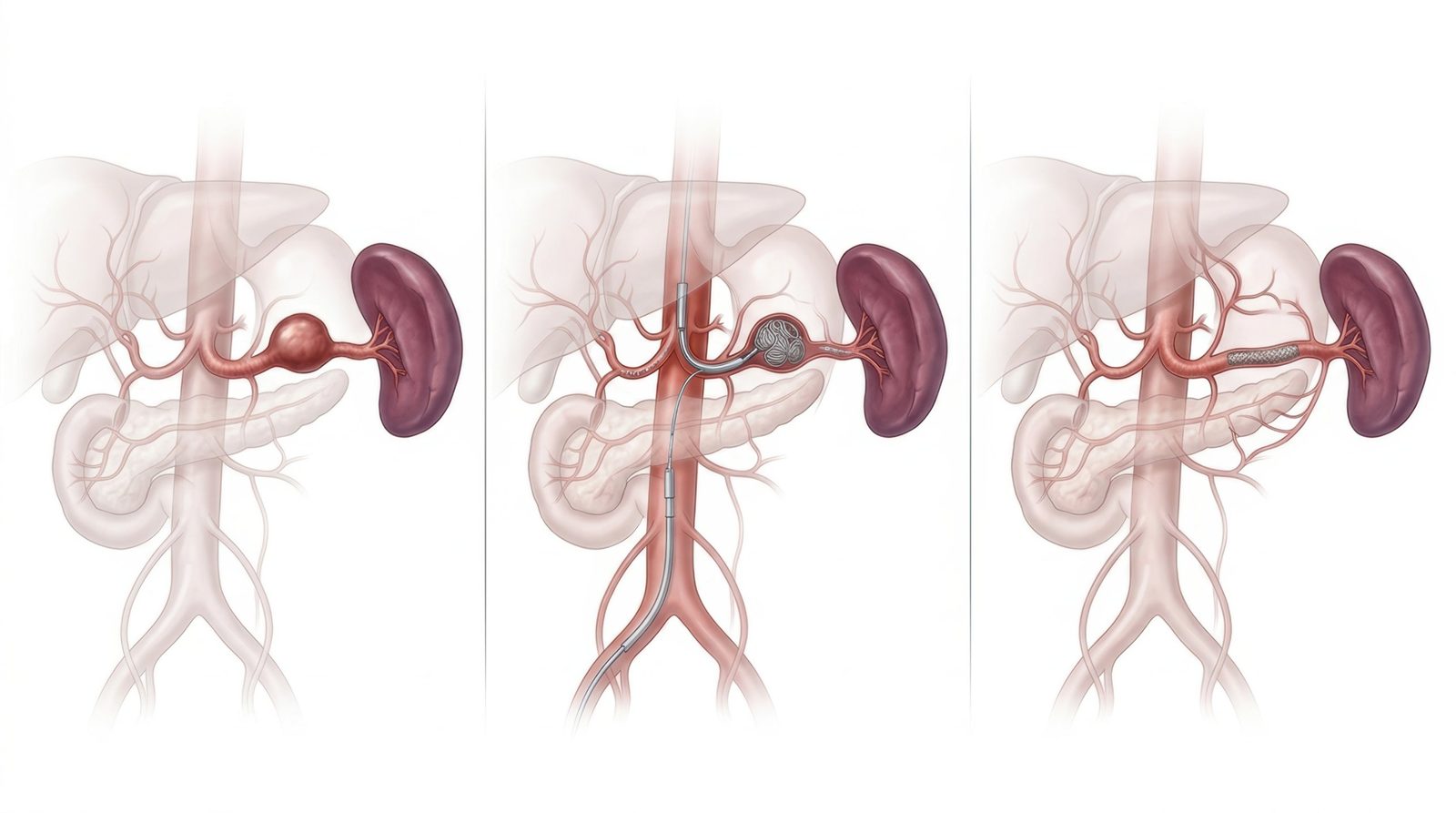
Diagrams of the treatment
From left to right: the splenic artery aneurysm, its exclusion by coil embolization, then by placement of a covered stent.
Frequently asked questions about splenic artery aneurysm
Does a splenic artery aneurysm always need to be operated on?
No. Depending on its size, its evolution, its symptoms, its location and the context, simple radiological surveillance may be proposed. Treatment is recommended when the risk of rupture is high, or when the aneurysm is symptomatic.
What difference does pregnancy or a plan to become pregnant make?
Pregnancy or a plan to become pregnant is one of the factors taken into account in the decision. The EASL (2025) guidelines recommend intervention regardless of the size of the aneurysm in women of childbearing age.
Embolization or open surgery?
When the anatomy allows, endovascular treatment (embolization or covered stent) is generally preferred. Open surgery remains necessary in case of rupture, a particular location (distal or hilar lesion) or when endovascular treatment is not possible.
Which signs should prompt an urgent consultation?
Intense, sudden abdominal pain, especially with faintness, pallor or loss of consciousness, should lead to an urgent medical consultation: it may indicate rupture of the aneurysm.
Learn more
To explore related topics:
Scientific references
- P.-E. Rautou et al. EASL Clinical Practice Guidelines on vascular diseases of the liver. Journal of Hepatology, 2025. doi:10.1016/j.jhep.2025.08.001
- R.A. Chaer et al. The Society for Vascular Surgery clinical practice guidelines on the management of visceral aneurysms. Journal of Vascular Surgery, 2020. doi:10.1016/j.jvs.2020.01.039

See a vascular surgeon
Dr Seban sees patients at the Hôpital Privé Pays de Savoie
19 avenue Pierre Mendès France, 74100 Annemasse.
Video consultations are also available.
A specialized vascular opinion to decide whether to monitor or treat
A splenic artery aneurysm discovered by chance requires a specialized assessment: size, location, pregnancy or plan to become pregnant. The vascular surgeon then proposes the most appropriate surveillance or treatment.