Phlebitis: symptoms, treatment and prevention of venous complications
Phlebitis refers to the formation of a blood clot (thrombus) in a vein, most often in the leg.
This condition, also known as venous thrombosis , requires prompt treatment to avoid any complications, including pulmonary embolism .
This condition is usually managed by vascular physicians/angiologists and cardiologists after a precise radiological diagnosis.


Understanding phlebitis
Phlebitis occurs when blood clots abnormally in a vein.
This clot partially or totally blocks blood circulation, causing pain, swelling, and local inflammation.
The two main forms:
Superficial phlebitis (superficial venous thrombosis, SVT):
It affects a superficial vein located under the skin, often linked to chronic superficial venous insufficiency. In 32% of the cases analyzed, an associated deep vein thrombosis was detected, including 17% by direct extension and 15% by distant extension. A risk of pulmonary embolism was suspected in 10% and confirmed in 3% of cases of superficial vein thrombosis.
Deep vein thrombosis:
It reaches a larger vein, located deep in the leg or pelvis.
➜ It can cause a pulmonary embolism if the clot migrates to the lungs.
Symptoms of phlebitis
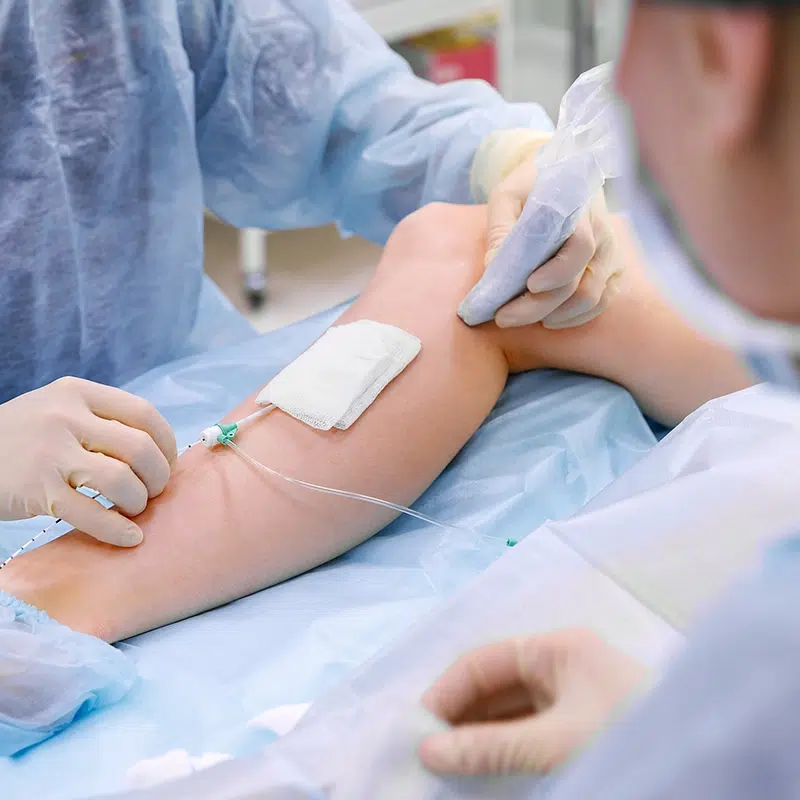
The symptoms of phlebitis vary depending on its location, but should always raise concern:
- Leg pain, often in the calf
- Swelling (edema) of a single limb
- Sensation of heat or tension
- Redness or bluish discoloration of the skin
- Heaviness and discomfort when walking
- Sometimes, mild fever or unexplained fatigue
⚠️ Deep vein thrombosis can sometimes go unnoticed.
If in doubt, it is essential to consult without delay to have a venous Doppler ultrasound performed .
Diagnosis of phlebitis
The diagnosis is based on a clinical examination and a venous Doppler ultrasound , performed by the vascular surgeon.
This painless examination allows us to:
- visualize the clot,
- identify the affected vein,
- measure the extent of the thrombosis.
In cases of TVS and after management by the angiologist, the underlying chronic venous insufficiency will need to be treated if necessary.
Treatment of phlebitis
Medical treatment
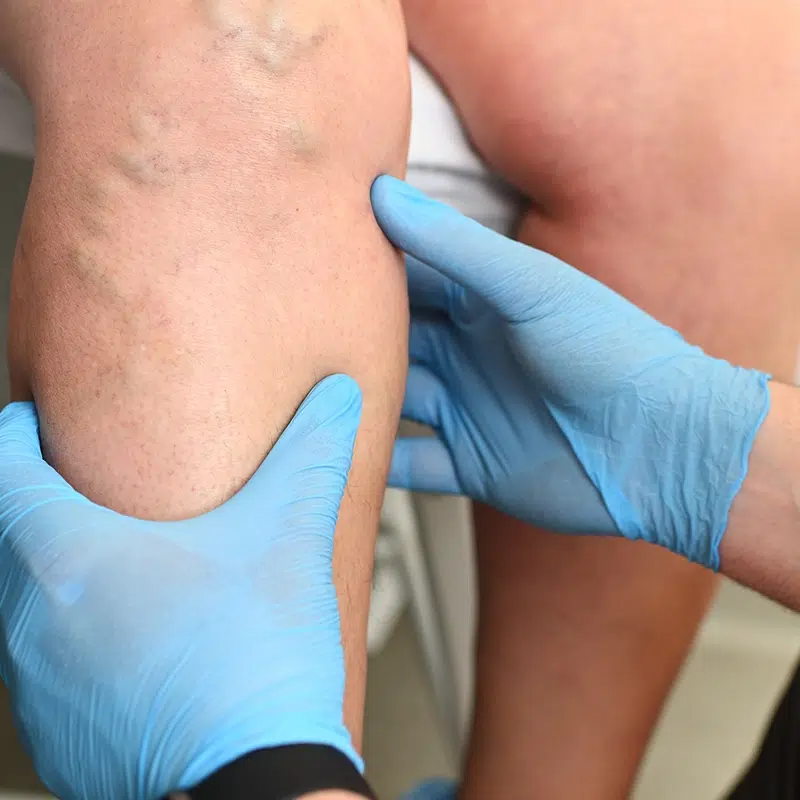
The treatment aims to prevent the clot from spreading and to prevent recurrences:
- Anticoagulants (injections or tablets) to thin the blood
- Compression stockings to improve venous return
- Regular walking to activate circulation
- Close medical monitoring, with Doppler checks
The duration of treatment depends on the type of phlebitis and its causes:
Generally 3 to 6 months , sometimes longer in case of recurrence.
Phlebitis and surgery: how long after the procedure?
Risks
- The patient remains bedridden for several days.
- There is a history of phlebitis or varicose veins,
- Dehydration or smoking disrupts circulation.
Prevention protocols
- preventive anticoagulant treatment,
- wearing compression stockings,
- Early mobilization from the first hours after surgery.
⏱️ In general, the return of normal circulation takes place within a few days to weeks, depending on the type of operation and the patient’s profile.
Possible complications
Without treatment, phlebitis can lead to:
A pulmonary embolism , potentially serious,
Chronic venous insufficiency ,
Post-thrombotic varicose veins ( heaviness, swelling, persistent pain).

Prevention and long-term monitoring
To prevent the recurrence of phlebitis:
- maintain regular physical activity ,
- Stay well hydrated (1.5 to 2 liters of water per day),
- avoid prolonged static positions ,
- wear compression stockings during long journeys.
- quit smoking and watch your weight.
Dr. Seban provides regular Doppler monitoring to check the quality of circulation and adjust the treatment if necessary.
The role of the vascular surgeon
The vascular surgeon is the specialist in the diagnosis and treatment of venous diseases .
In the case of phlebitis, its role is to:
- confirm the diagnosis by Doppler ultrasound.
- to implement the appropriate anticoagulant treatment,
- monitor the clot’s resorption,
- to advise the patient on prevention and lifestyle.
Dr. Guilhem Seban provides this comprehensive care, from initial diagnosis to post-treatment follow-up , in Annecy, Annemasse and Geneva.

Consult for phlebitis or venous monitoring
Dr. Seban consults at the Pays de Savoie Private Hospital
19 avenue Pierre Mendès France, 74100 Annemasse.
Video conference consultations are also possible.
A condition to monitor, a controlled management
Phlebitis requires a rapid response, but with early diagnosis and appropriate treatment , its outcome is most often favorable.
Thanks to his expertise in vascular surgery , Dr. Guilhem Seban provides comprehensive support to protect your venous health in the long term.