Arteritis: symptoms, diagnosis and treatments to restore circulation
Arteritis is a disease of the arteries that leads to a narrowing or blockage of the blood vessels.
This condition disrupts circulation, particularly in the lower limbs , and can cause pain, cramps, or poorly healing wounds. During walking, muscles require more oxygen and nutrients. If blood flow is too low due to arterial narrowing during exertion, the muscles suffer, and the patient experiences pain (for example, in the calf or thigh). This condition is known as claudication.
In more serious cases, rest pain may appear with critical ischemia requiring very rapid management.
Recognizing the symptoms of arteritis and consulting a vascular surgeon helps prevent serious complications, such as gangrene or amputation.
Most treatments for lower limb arteriopathy are now performed using endovascular techniques.
Dr. Guilhem Seban , a specialist in vascular surgery , handles the diagnosis, treatment and follow-up of this arterial pathology in Annecy , Annemasse and Geneva .

What is arteritis?
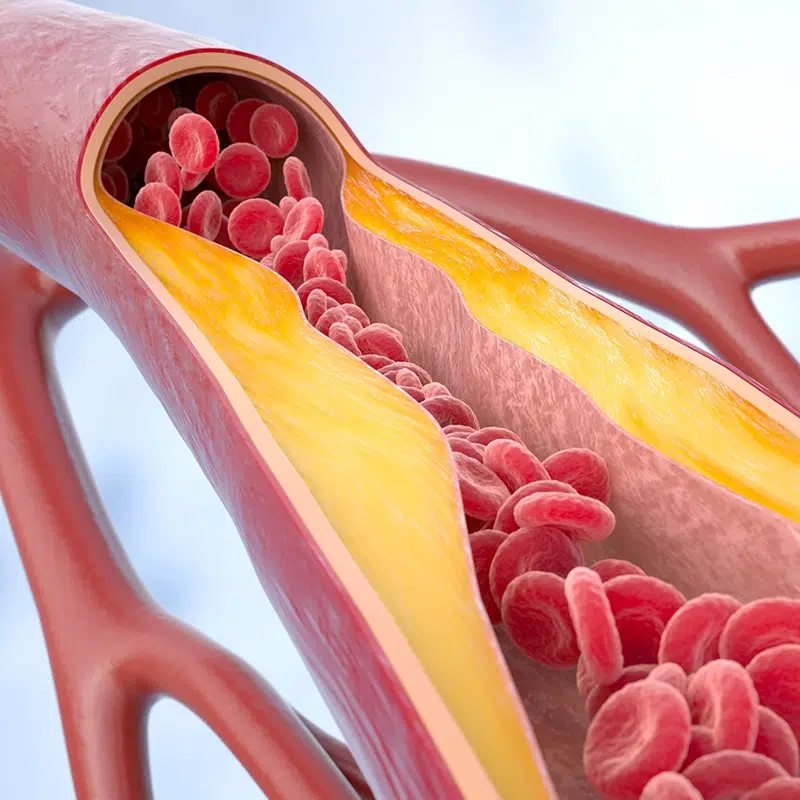
Arteritis, also called peripheral arterial disease (PAD) , is due to the formation of fatty deposits (atheroma) on the walls of the arteries.
These deposits reduce blood flow and decrease the supply of oxygen to the muscles.
Arteritis is a silent disease in its early stages; early diagnosis greatly improves quality of life.
Symptoms of arteritis
The symptoms of arteritis appear gradually, in relation to the severity of the arterial narrowing:
- Cramps in the calves or thighs when walking, disappearing at rest ( intermittent claudication );
- Nighttime pain in the legs or feet;
- Cold or numb feet;
- Abnormal skin discoloration ;
- Wounds or ulcers on the legs that do not heal.
In advanced stages, the pain becomes permanent, a sign of critical ischemia requiring urgent treatment.
Risk factors

Tobacco (major factor);

High blood pressure;

Diabetes

Excess cholesterol;

Sedentary lifestyle

Advanced age or family history of cardiovascular disease.
Prevention relies on quitting smoking, physical activity, and regular monitoring of blood pressure and cholesterol.
Diagnosis of arteritis
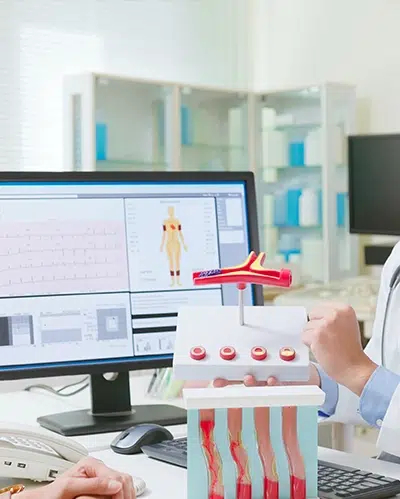
The diagnosis is based on a clinical examination and simple additional tests:
Pulse palpation
Ankle-Brachial Index (ABI)
It measures the ratio between blood pressure at the ankle (or toe) and blood pressure in the arms. A ratio between 1 and 0 allows for rapid diagnosis and effective monitoring.
A pathological ABI (< 0.9) multiplies the cardiovascular risk and requires thorough evaluation, especially in at-risk patients such as smokers or diabetics. Very low values (< 0.6) indicate potential critical ischemia.
An index below 0.4 indicates severe critical ischemia
Arterial Doppler ultrasound
Angio-CT scan or vascular MRI
to accurately map the lesions before surgery. Lower limb CT angiography, if renal function allows (iodine must be injected to perform a CT angiography) is the examination of choice for the vascular surgeon;
Treatments for arteritis
The goal is to restore circulation and avoid complications.
Medical treatment
- Complete cessation of smoking ;
- Daily supervised walking; Gait training is an effective treatment for uncomplicated arterial disease without trophic disorders or critical limb ischemia. To put it simply, “when the highway is congested, the local roads develop and take over.” The same principle applies to arterial disease. Suboptimal gait training (until pain develops) helps the development of collateral arteries and improves systolic blood pressure.
- Medications to thin the blood and reduce cholesterol;
- Management of diabetes or hypertension.
- Diet also plays a central role in the fight against arteriopathy.
Surgical or endovascular treatment
When the arteries are severely narrowed, intervention may be necessary:
- Angioplasty : dilation of the artery using a balloon; the surgeon, under local or general anesthesia, punctures an artery to insert a guide wire and then a balloon, which will dilate the narrowed or blocked artery. If necessary, a stent will be placed to keep the artery open.
- Stent placement : keeping the vessel open;
- Arterial bypass : creation of a bypass to circumvent the blocked area. A tube is used to replace an occluded artery, creating a bypass between a healthy area and an arterial area beyond the occluded artery. The “tube” can be a vein from the patient (the best solution), a synthetic prosthesis, or an arterial or venous allograft (an artery or vein taken from another individual).
- The future will likely be marked by the use of gene therapy and pluripotent stem cells to recreate healthy arteries de novo or to manufacture custom-made biological prostheses compatible with the patient.
These procedures are performed by Dr. Seban , under regional anesthesia, with simple after-effects and a rapid return to walking.
Monitoring and prevention
After treatment, regular follow-up is essential:
- Echo-Doppler control;
- Monitoring of blood pressure, cholesterol and diabetes;
- Appropriate physical activity advice;
- Support for smoking cessation.
Daily walking is the best “medicine” for maintaining circulation.


Consult a vascular surgeon
Dr. Seban consults at the Pays de Savoie Private Hospital
19 avenue Pierre Mendès France, 74100 Annemasse.
Video conference consultations are also possible.
Restoring healthy circulation, one step at a time
Arteritis is a serious but manageable disease when detected early.
Appropriate care and careful monitoring help to preserve mobility and avoid complications.