Vascular surgery: modern techniques for treating venous and arterial diseases
Vascular surgery encompasses all treatments aimed at correcting blood circulation disorders in the arteries and veins .
Arteries can be abnormally dilated, which is called an aneurysm, or narrowed or blocked, which is called stenosis or occlusion.
Veins may not drain blood properly, leading to abnormal reflux, as is the case in venous insufficiency of the lower limbs and varicose veins, or in pelvic congestion syndrome (pelvic varicose veins).
When a vein becomes blocked with a blood clot, it is called venous thrombosis.
Thanks to technological advances, vascular surgery interventions are now more precise , safe and often less invasive , particularly thanks to minimally invasive techniques such as HIFU techniques for the treatment of varicose veins, outpatient embolization for pelvic varicose veins, aortic endoprostheses for aortic aneurysms or carotid stenting.
Dr. Guilhem Seban , a vascular surgeon in Annemasse, Haute-Savoie near Geneva , practices various venous and arterial surgery techniques, with a particular focus on the treatment of varicose veins without anesthesia and arterial endovascular procedures .
All pathologies of the lower limbs are treated (arteriopathy, ischemia, popliteal aneurysms, varicose veins).
The treatment of aneurysms, arteriopathy of the lower limbs and venous diseases (varicose veins of the lower limbs, pelvic varicose veins) are the most frequently treated pathologies.
Definition of vascular surgery
Vascular surgery is a surgical specialty that treats diseases affecting blood vessels (arteries and veins), excluding the heart.
Its purpose is to:
- preventing complications through targeted predictive medicine aimed at preventing the onset of vascular diseases
- Preventing serious complications (embolisms, ischemia, aneurysm ruptures, varicose ulcers),
- Restoring normal blood circulation using minimally invasive techniques
- Relieve symptoms related to poor circulation: heavy legs, swelling, pain, or cramps. Treatment of peripheral artery disease.
Vascular surgeons undergo extensive initial training, which continues throughout their careers through ongoing professional development. They are highly skilled in both surgical procedures and endovascular interventional radiology techniques.
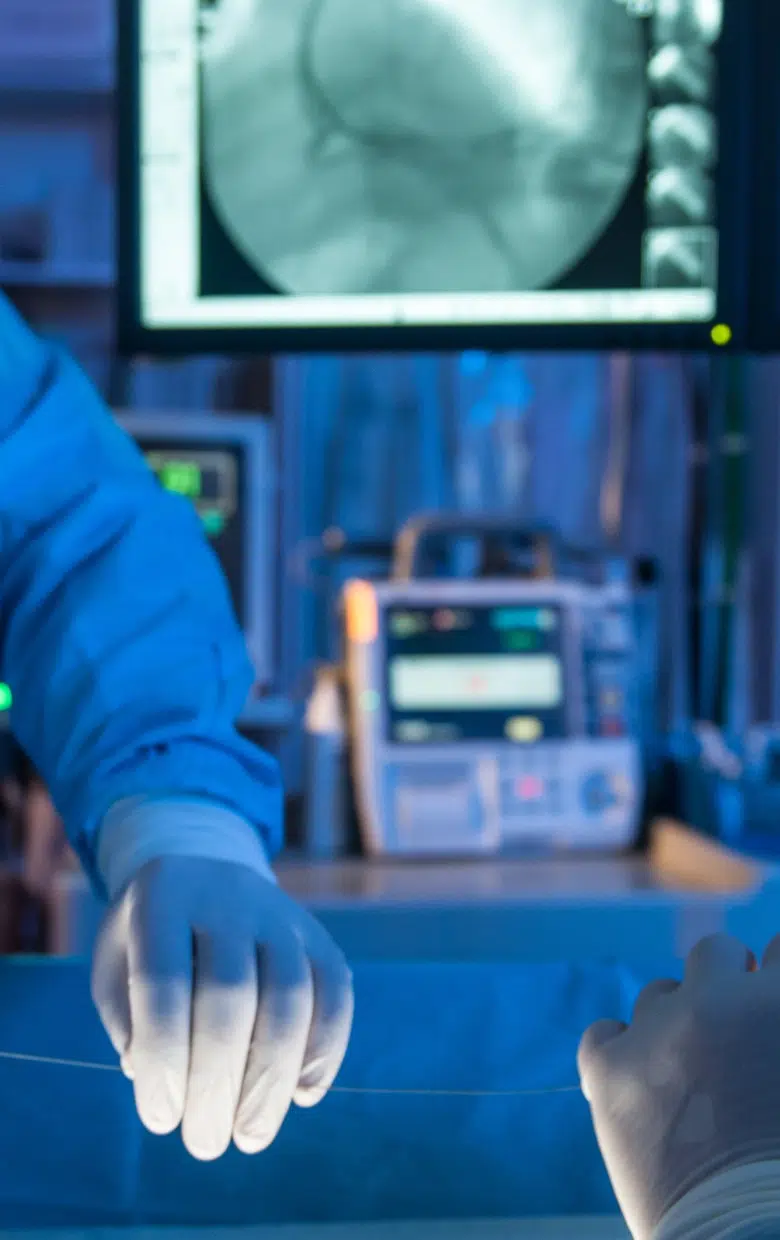
Vascular surgeons are skilled in open surgery (bypass surgery, aneurysm surgery, carotid surgery) and endovascular surgery without opening (endolaser treatment of varicose veins, embolization of pelvic varicose veins, angioplasty and stent placement, treatment of aortic aneurysms by endoprosthesis, carotid angioplasty, etc.).
In the event of a complication from an interventional radiology procedure, only a vascular surgeon is capable of performing the surgical repair.
Dr. Guilhem Seban, vascular and endovascular surgeon, practices venous surgery , open arterial surgery and endovascular surgery , according to the needs of each patient.
Endovenous laser: The current gold standard treatment for venous insufficiency
Endovenous laser therapy (EVLT ) is a leading minimally invasive technique for removing varicose veins without resorting to major surgery. The principle, similar to radiofrequency ablation also used in varicose vein treatment, is to heat the vein to be treated to ensure its destruction and eliminate the reflux (venous insufficiency) caused by this backflow.
Principle of treatment
Endovenous laser treatment involves:
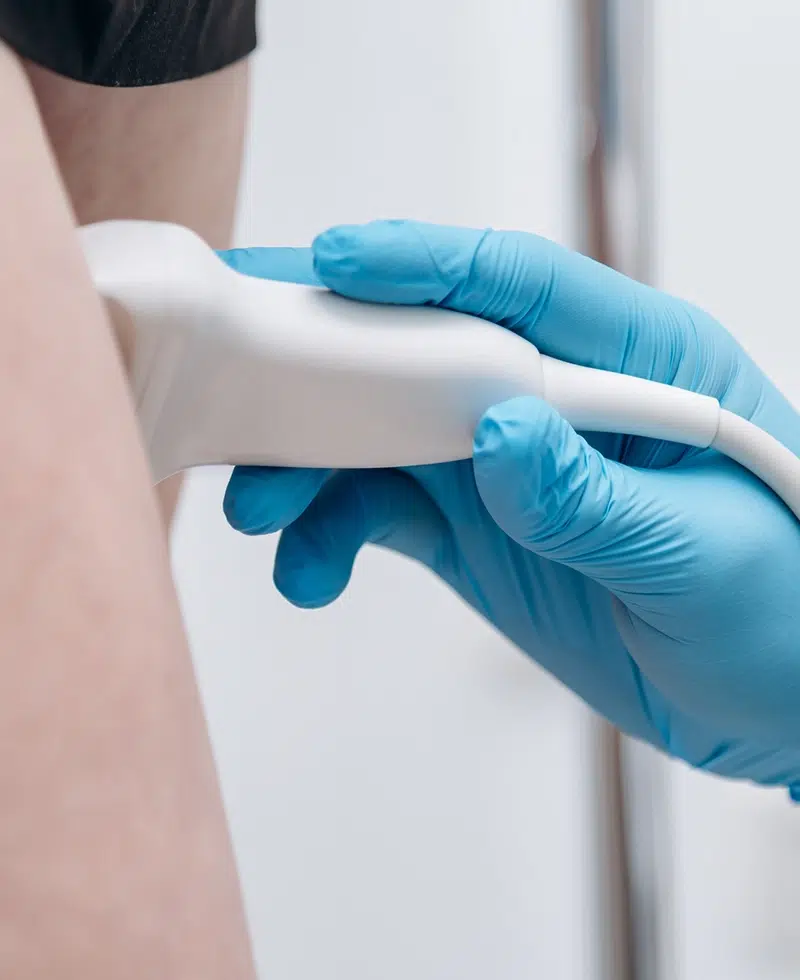
- Introduce a thin optical fiber into the diseased vein under ultrasound guidance (usually the internal saphenous vein).
- Delivering light energy that causes the controlled closure of the failing vein.
- Redirecting circulation to healthy veins and interrupting the abnormal blood flow that feeds and makes leg varicose veins “grow”.
The procedure is performed on an outpatient basis , under local or very short general anesthesia , and requires no major incisions . Walking and showering can be resumed immediately. Depending on the profession, a sick leave may be prescribed.
The advantages of endovenous laser
- A quick and relatively painless procedure , completed in less than an hour.
- Little visible scarring and no prolonged work stoppage.
- Long-lasting aesthetic and medical results .
- Immediate resumption of walking and daily activities.
Endovenous laser treatment of varicose veins is today the method of choice for achieving healthy and aesthetically pleasing venous circulation, in complete safety.
Treatment of venous insufficiency by HIFU (high intensity frequency ultrasound)
HIFU treatment for varicose veins is a true revolution, and a French one at that! The principle is as follows: two high-frequency ultrasound sources converge at a precise point and deliver energy through the skin to the vein being treated. The energy is transformed into heat and destroys the vein, just like in laser techniques.
The main advantage is that the technique requires neither anesthesia nor hospitalization.
For more information, please contact Dr. G. SEBAN directly.
Other techniques used in vascular surgery
Open surgery
It remains indicated in certain cases of significant arterial involvement (arteritis, aortic aneurysm).
Dr. Seban then replaces the weakened section of the vessel with a vein or a synthetic vascular prosthesis and performs a bypass to restore blood flow. Whenever possible, he will use a superficial vein from the patient to harvest and perform the bypass (better long-term patency, less risk of infection).
Endoprostheses (endovascular surgery)
This technique involves treating the vessels from the inside , by inserting a prosthesis via the arteries, without surgical opening .
It is now widely used for the treatment of aortic aneurysms and certain peripheral arterial diseases .
The principle of aortic endoprostheses is to isolate the aneurysm from the bloodstream . To simplify, it involves placing a “normal tube” inside a “dilated tube” : the weakened area is then no longer subjected to blood pressure, which eliminates the risk of rupture .
Endoprostheses are custom-made , according to the instructions of the vascular surgeon, in order to perfectly adapt to the patient’s anatomy.
Today, the treatment of aortic aneurysms is mostly performed percutaneously (punctures through the skin, without scarring or incisions). Dr. Seban treats nearly 95% of aortic aneurysms using percutaneous endoprosthesis.
The advantages of this technique are major: no opening of the abdomen , reliability of the equipment , and very short hospital stay in the absence of complications.
Angioplasty of the lower limbs
Conditions treated
Dr. Seban provides treatment for all arterial and venous pathologies:

Varicose veins

Phlebitis

Aortic aneurysm

Arteritis

Cockett syndrome

Pelvic varicose veins and pelvic venous insufficiency
Carotid artery diseases Carotid stenosis
These procedures are carried out in accordance with the latest medical protocols, with personalized follow-up for each patient.
Difference between vascular surgery and
cardiovascular surgery
It is common to confuse these two specialties.
Vascular surgery
Treats vessels outside the heart and brain, including arteries and veins in the legs, abdomen, or neck.
Cardiovascular surgery
As for it, it concerns the heart and coronary arteries.
Dr. Seban does not treat heart or ascending aortic diseases.
Dr. Guilhem Seban’s approach
Dr. Seban favors precision medicine , based on:
- an open patient/surgeon relationship
- proven minimally invasive techniques ,
- rigorous post-operative monitoring ,
- and clear information on the benefits and alternatives of each treatment.
Each patient benefits from tailored support, combining medical rigor and therapeutic comfort .
A qualified medical assistant conducts the consultation.

Where to consult?
Dr. Seban consults at the Pays de Savoie Private Hospital
19 avenue Pierre Mendès France, 74100 Annemasse.
Video conference consultations are also possible.
Expertise at the service of your venous health
Modern vascular surgery allows for targeted, effective and minimally invasive intervention to restore good circulation and sustainably improve quality of life.