Vascular conditions in athletes: understanding, diagnosing and treating them
Athletes, particularly endurance and elite athletes, can be exposed to specific vascular conditions: arterial endofibrosis in athletes, popliteal artery entrapment, exertional thromboses and compartment syndrome. They often show up as pain or discomfort that always appears at the same level of effort.
Dr Guilhem Seban, vascular and endovascular surgeon at the Pays de Savoie Private Hospital (Annemasse), treats arterial endofibrosis in athletes, popliteal artery entrapment, exertional thromboses and compartment syndrome.
When sport puts the vessels to the test
These conditions affect athletes whose activity places repeated flow, movement and compression stresses on arteries and veins: cycling, running, trail running, marathon, swimming, climbing, throwing sports, weightlifting.
Four situations are worth knowing:
- Arterial endofibrosis in athletes: narrowing of the external iliac artery, especially in elite cyclists;
- Popliteal artery entrapment: chronic compression of the artery behind the knee, with calf cramping during exercise;
- Exertional thrombosis: a vein or an artery becomes blocked during intense sporting effort (trail running, marathon, throwing sports);
- Chronic exertional compartment syndrome: tightness pain that is reproducible at a given intensity or distance.

Arterial endofibrosis in athletes (external iliac artery)
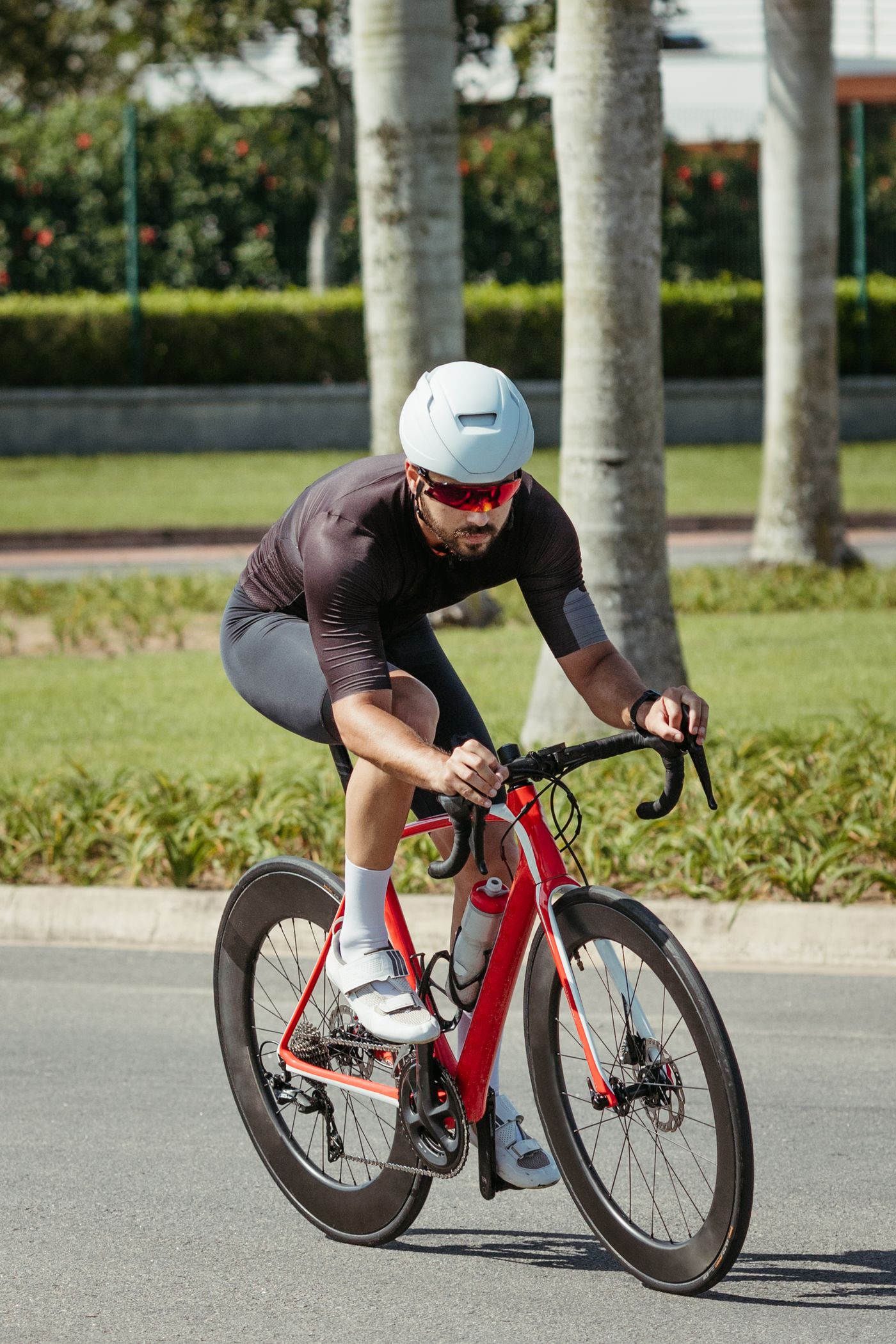
Arterial endofibrosis in athletes most frequently affects elite cyclists, and more rarely other endurance athletes such as marathon runners. The artery most often affected is the external iliac artery, located in the pelvis.
Subjected to intense flow and movement stresses, this artery develops an area of endofibrosis that narrows its diameter. Blood flow is then no longer sufficient to supply the muscles of the lower limb: a cramp or paralysis occurs and stops the athlete during high-intensity efforts. In some advanced cases, the artery can become blocked and cause ischemia.
Only a vascular surgeon is able to manage this type of condition. Dr Guilhem Seban treats this condition at the Pays de Savoie Private Hospital (Annemasse).
Diagnosis, treatment and return to sport
Diagnosis is both clinical and radiological. Treatment is surgical when the functional limitation is significant.
How is iliac endofibrosis diagnosed?
Diagnosis relies on the clinical examination on the one hand, and on a CT angiography of the lower limbs on the other, which specifies the location of the lesion, its severity and the anatomical features of the affected artery. An exercise Doppler ultrasound may sometimes be performed in doubtful cases.
What surgical treatment?
Treatment is surgical in all cases: the artery is repaired so as to restore correct, optimal flow during exercise. It is indicated in endurance athletes with a significant functional limitation, confirmed by vascular tests performed during exercise, after training adaptation has failed.
The reference technique is endofibrosectomy (or endarterectomy of the fibrotic area) combined with angioplasty with an autologous vein patch, often completed by release of the iliac artery or of the inguinal ligament in case of associated compression or kinking. Endovascular angioplasty and stent placement are generally discouraged in these athletes, because of repeated mechanical stresses and the risk of restenosis, fracture or migration of the device (Hinchliffe et al., European Journal of Vascular and Endovascular Surgery, 2016).
In case of a long lesion, complete occlusion, dissection or extensive involvement, segmental resection with venous or prosthetic interposition may be considered.
What results, and when can you return to sport?
Surgical results are generally favorable: in a cohort of 68 athletes treated by endarterectomy with an autologous patch, 91.7% of patients were satisfied after a median follow-up of 11.1 years, with a 30-day major complication rate of 5.1% (van Hooff et al., Journal of Vascular Surgery, 2023).
A gradual return to sport is usually considered after healing and a clinical and hemodynamic reassessment. Annual follow-up is recommended because of the risk of recurrence or new arterial involvement (Hinchliffe et al., 2016).
In iliac endofibrosis, a gradual return to sport, without supra-maximal effort, can usually be considered after two months. The surgeon will judge, during the postoperative follow-up visits, the right time for a full return to sport. During follow-up, a control Doppler ultrasound and/or CT angiography may be requested.
Popliteal artery entrapment: calf cramping during exercise
The popliteal artery runs behind the knee. It can be chronically compressed by abnormal ligaments or muscle bundles. Over time, a fibrotic lesion can develop, and may even progress to occlusion.
The warning sign is a cramp-like pain in the calf during exercise.
The vascular surgeon determines the course of action. A CT angiography and/or an MRI of the popliteal fossa specify the anatomical type of the lesion, whose treatment is always surgical in the most symptomatic cases.
Only a vascular surgeon is able to manage this type of condition. Dr Guilhem Seban treats this condition at the Pays de Savoie Private Hospital (Annemasse).

Exertional thrombosis in athletes
Without any pre-existing condition, an exertional thrombosis (an artery or a vein becomes blocked during intense sporting effort) can occur in athletes, particularly in trail running or marathon. It can affect the upper limbs and cause an exertional phlebitis of the upper limb.
Dr Guilhem Seban treats this condition at the Pays de Savoie Private Hospital (Annemasse).
Exertional venous thrombosis: Paget-Schroetter syndrome
In athletes, exertional thrombosis mainly refers to Paget-Schroetter syndrome: an axillo-subclavian venous thrombosis favored by repeated movements of the upper limb, in particular abduction and external rotation in throwing sports, swimming, climbing or weightlifting. Dynamic narrowing of the costoclavicular space leads to intimal microtrauma, inflammation, and then thrombosis.
It typically presents with sudden pain, swelling of one arm, bluish discoloration, heaviness and sometimes the development of collateral veins. A pulmonary embolism or a post-thrombotic syndrome can complicate delayed management.
In the systematic review by Keller et al. covering 123 athletes, baseball and weightlifting were the most represented sports, with an average return to sport at 4.7 months and complications in 26.7% of subjects, mainly pulmonary embolisms (Journal of Shoulder and Elbow Surgery, 2020).
What treatment for exertional venous thrombosis?
Initial treatment relies on anticoagulation, following the usual principles for deep vein thrombosis (ESVS 2021 guidelines).
In young, very active patients with acute symptomatic thrombosis and persistent anatomical compression, a strategy combining early endovascular thrombolysis or thrombectomy followed by decompression of the thoracic outlet (often by resection of the first rib) may be discussed in a specialized center.
The meta-analysis by Hoexum et al. (60 studies, 2,653 patients) reported an absence of symptoms in 54% of patients treated with anticoagulation alone, versus 96% after thrombolysis followed by first rib resection. This comparison favors the second strategy, but the level of certainty is very low, as the data are mostly observational (European Journal of Vascular and Endovascular Surgery, 2023).
Exertional arterial injuries
Exertional arterial injuries are a different entity: repeated trauma, dynamic compression or twisting can cause intimal stenosis, dissection, an aneurysm with embolization or acute thrombosis. The classic locations are the axillary or subclavian artery in throwers, the external iliac artery in cyclists and the popliteal artery in certain entrapment syndromes in runners.
They should be suspected in case of claudication reproducible on exertion, a weakened or absent pulse, coldness, paresthesia or acute ischemia. Doppler ultrasound with provocative maneuvers, completed by CT angiography or MR angiography, can specify the lesion.
Acute ischemia requires urgent vascular assessment: treatment generally aims at correcting the mechanical lesion and revascularization, not anticoagulation alone. In a cohort of 26 athletes with vascular complications, Arko et al. observed 14 arterial lesions (axillo-subclavian, popliteal and iliac), several of them complicated by distal embolization (Journal of Vascular Surgery, 2001; Menon et al., 2019).

Exertional phlebitis of the arm: do not wait
A sudden pain in the arm, swelling on one side only, bluish discoloration of the skin or heaviness after repeated effort of the upper limb warrant a rapid vascular opinion. Delayed management carries a risk of pulmonary embolism and post-thrombotic syndrome.
To understand the signs of phlebitis and its treatment, see our dedicated page.
Compartment syndrome in athletes (chronic exertional compartment syndrome)
Chronic exertional compartment syndrome is a cause of pain in athletes, typically reproducible at a given intensity or distance, accompanied by a feeling of tightness, sometimes paresthesia or weakness, and which subsides at rest.
Diagnosis relies first on the history and a clinical examination performed after provoking the symptoms, excluding a stress fracture, medial tibial stress syndrome, nerve involvement or a vascular condition.
Dr Guilhem Seban treats this condition at the Pays de Savoie Private Hospital (Annemasse).
How is compartment syndrome confirmed?
A dynamic measurement of intracompartmental pressures can confirm the diagnosis, classically with the Pedowitz thresholds: resting pressure ≥ 15 mmHg, at 1 minute ≥ 30 mmHg or at 5 minutes ≥ 20 mmHg. These values and the measurement protocols remain, however, debated (Delphi consensus, Sports Medicine, 2022).
What treatment for compartment syndrome?
Initial treatment combines reduction or adaptation of activity, physiotherapy, correction of running technique and sometimes orthoses.
In case of persistent, disabling symptoms despite several months of conservative treatment, a fasciotomy of the affected compartment(s) may be proposed. The systematic review by Vogels et al. reports about 85% satisfaction and 80% return to activity after surgery, with a limited level of evidence (Scandinavian Journal of Medicine and Science in Sports, 2020).
Key point: in an athlete with a stereotyped exertional pain, the next step is a specialized evaluation with an exercise test, exclusion of differential diagnoses and, if necessary, a dynamic pressure measurement before considering a fasciotomy.
When should you see a vascular surgeon?
See a vascular surgeon promptly in case of:
- pain or cramping reproducible on exertion, which limits performance and subsides at rest;
- a weakened or absent pulse, coldness, paresthesia of the limb;
- sudden swelling of an arm or a leg, with heaviness or bluish discoloration;
- suspected acute ischemia: this is a vascular emergency.
Frequently asked questions about vascular conditions in athletes
Which sports are affected by vascular conditions in athletes?
Iliac endofibrosis mainly affects elite cyclists and, more rarely, athletes such as marathon runners. Exertional thrombosis is seen in trail running and marathon, and venous thrombosis of the upper limb in throwing sports, swimming, climbing or weightlifting (baseball and weightlifting being the most represented in published series).
Why is a stent generally discouraged in iliac endofibrosis?
In these athletes, repeated mechanical stresses expose the device to a risk of restenosis, fracture or migration. The reference technique remains endofibrosectomy combined with angioplasty with an autologous vein patch.
Does exertional thrombosis of the arm always require surgery?
No. Initial treatment relies on anticoagulation. In young, very active patients with acute symptomatic thrombosis and persistent anatomical compression, early thrombolysis or thrombectomy followed by decompression of the thoracic outlet may be discussed in a specialized center.
How is compartment syndrome distinguished from a vascular condition?
Diagnosis of compartment syndrome relies on the clinical examination after provoking the symptoms, excluding a vascular condition, nerve involvement or a stress fracture. A dynamic measurement of intracompartmental pressures can confirm it.
Learn more
To explore related vascular conditions:
Scientific references
- R.J. Hinchliffe et al. Diagnosis and Management of Iliac Artery Endofibrosis: Results of a Delphi Consensus Study. European Journal of Vascular and Endovascular Surgery, 2016. doi:10.1016/j.ejvs.2016.04.004
- M. van Hooff et al. Short- and long-term outcomes after endarterectomy with autologous patching in endurance athletes with iliac artery endofibrosis. Journal of Vascular Surgery, 2023. doi:10.1016/j.jvs.2023.03.501
- S.K. Kakkos et al. European Society for Vascular Surgery (ESVS) 2021 Clinical Practice Guidelines on the Management of Venous Thrombosis. European Journal of Vascular and Endovascular Surgery, 2020. doi:10.1016/j.ejvs.2020.09.023
- R.E. Keller et al. Paget-Schroetter syndrome in athletes: a comprehensive and systematic review. Journal of Shoulder and Elbow Surgery, 2020. doi:10.1016/j.jse.2020.05.015
- F. Hoexum et al. Management of Paget-Schroetter Syndrome: a Systematic Review and Meta-Analysis. European Journal of Vascular and Endovascular Surgery, 2023. doi:10.1016/j.ejvs.2023.08.065
- F.R. Arko et al. Vascular complications in high-performance athletes. Journal of Vascular Surgery, 2001. doi:10.1067/mva.2001.115162
- D. Menon et al. Overview of arterial pathology related to repetitive trauma in athletes. Journal of Vascular Surgery, 2019. doi:10.1016/j.jvs.2019.02.002
- S. Vogels et al. Clinical Consensus on Diagnosis and Treatment of Patients with Chronic Exertional Compartment Syndrome of the Leg: A Delphi Analysis. Sports Medicine, 2022. doi:10.1007/s40279-022-01729-5
- S. Vogels et al. Systematic review of outcome parameters following treatment of chronic exertional compartment syndrome in the lower leg. Scandinavian Journal of Medicine and Science in Sports, 2020. doi:10.1111/sms.13747

See a vascular surgeon
Dr Seban sees patients at the Hôpital Privé Pays de Savoie
19 avenue Pierre Mendès France, 74100 Annemasse.
Video consultations are also available.
A specialized vascular opinion to get back to sport with confidence
Pain on exertion, a weakening pulse or a swelling arm are never trivial in an athlete. An early vascular assessment makes it possible to reach the right diagnosis and, when needed, to propose appropriate management.