Aortic aneurysm surgery: prevention and treatment of arterial diseases
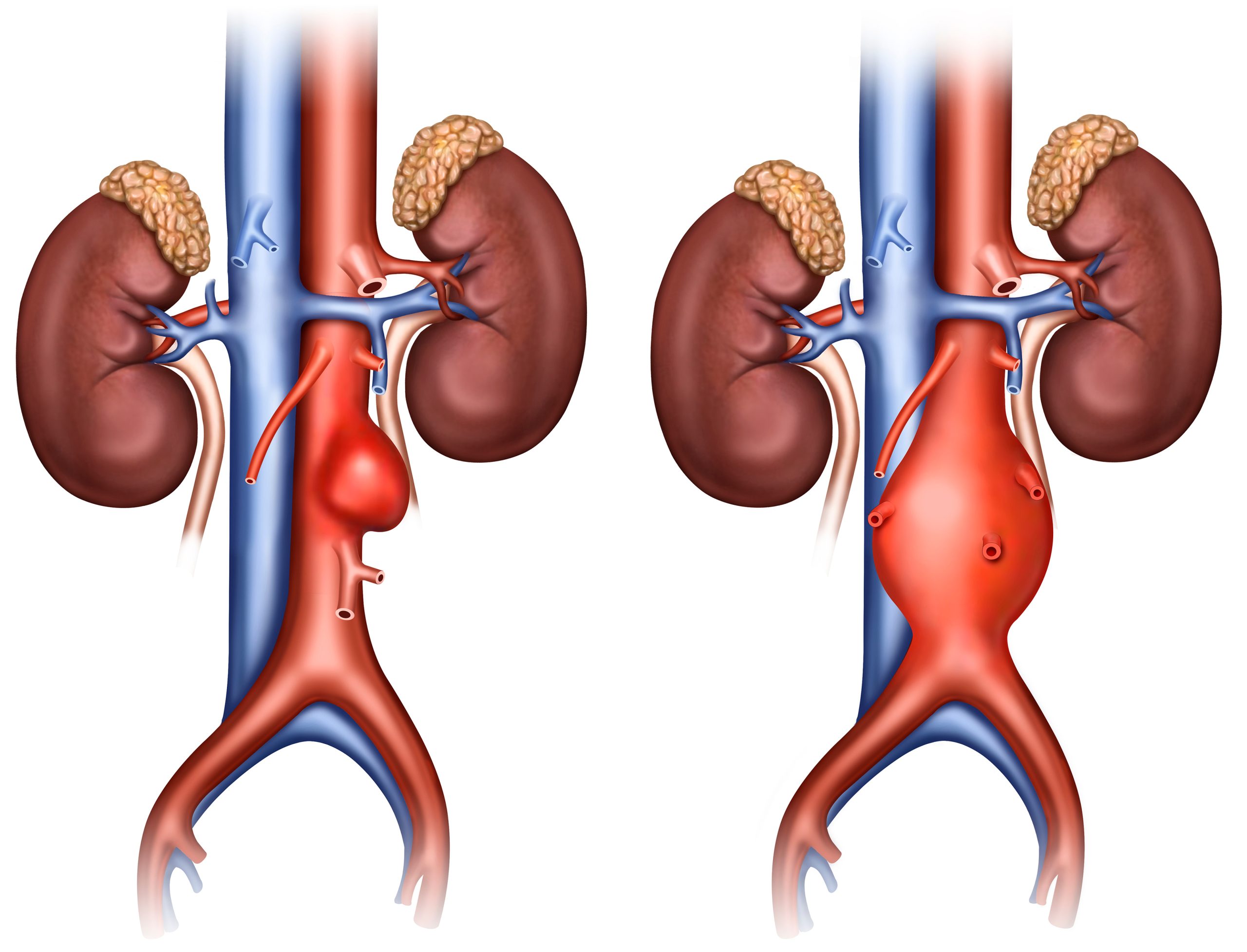
An aortic aneurysm is an abnormal dilation of the wall of the aorta , the main artery of the human body.
If left untreated, it can rupture and cause severe internal bleeding . In more than 80% of cases , aortic aneurysms develop in the abdominal aorta .
Currently, the most accurate predictor of rupture is the maximum diameter of the aneurysm . The risk of rupture increases significantly beyond 5 cm .
An operation to repair an aortic aneurysm can prevent this risk.
Dr. Guilhem Seban, a vascular surgeon in Annecy, Annemasse and Geneva, performs these procedures according to the latest international recommendations , in a safe environment .
He was the first surgeon to perform the placement of an endoprosthesis for an aortic aneurysm in Haute-Savoie.

What is an aortic aneurysm?
The aorta carries blood from the heart to the rest of the body.
An aneurysm corresponds to a localized dilation of this artery with loss of parallelism of its edges.
The most frequent forms involve:
- The abdominal aorta (below the kidneys), most often affected in 80% of cases;
- The thoracic aorta , rarer but just as dangerous.
Ruptured aneurysm is a life-threatening emergency with a high mortality rate: prevention and screening are essential.
Causes and risk factors
Several factors increase the risk of developing an aneurysm:
- High blood pressure ;
- Tobacco (a major factor in weakening the arteries);
- Family history of aneurysm (genetic risk)
- Age over 70 years ;
- Atherosclerosis (accumulation of deposits on arterial walls).
Regular monitoring is recommended for people at risk, particularly through ultrasound or screening scans .
The methods for screening for aortic aneurysms:
- Men aged 65 to 75 who have smoked, even if they quit less than 20 years ago, or current smokers (defined as at least one cigarette per day).
- Men aged 50 to 75 years with a first-degree family history of abdominal aortic aneurysm (father, mother, brother, sister).
In France, systematic screening is not organized but is opportunistically recommended for these at-risk groups. The indication for women is more debated and is generally offered in cases of major cardiovascular risk factors or a family history of cardiovascular disease.
Symptoms of an aortic aneurysm
In the majority of cases, an aneurysm develops without symptoms .
It is often discovered by chance , during a radiological examination.
When it becomes symptomatic, it can cause:
- Persistent abdominal or lower back pain ;
- A pulsating sensation in the stomach;
- Unusual fatigue or shortness of breath .
Intense and sudden pain may signal an imminent rupture: this then constitutes a surgical emergency .
Diagnosis and monitoring
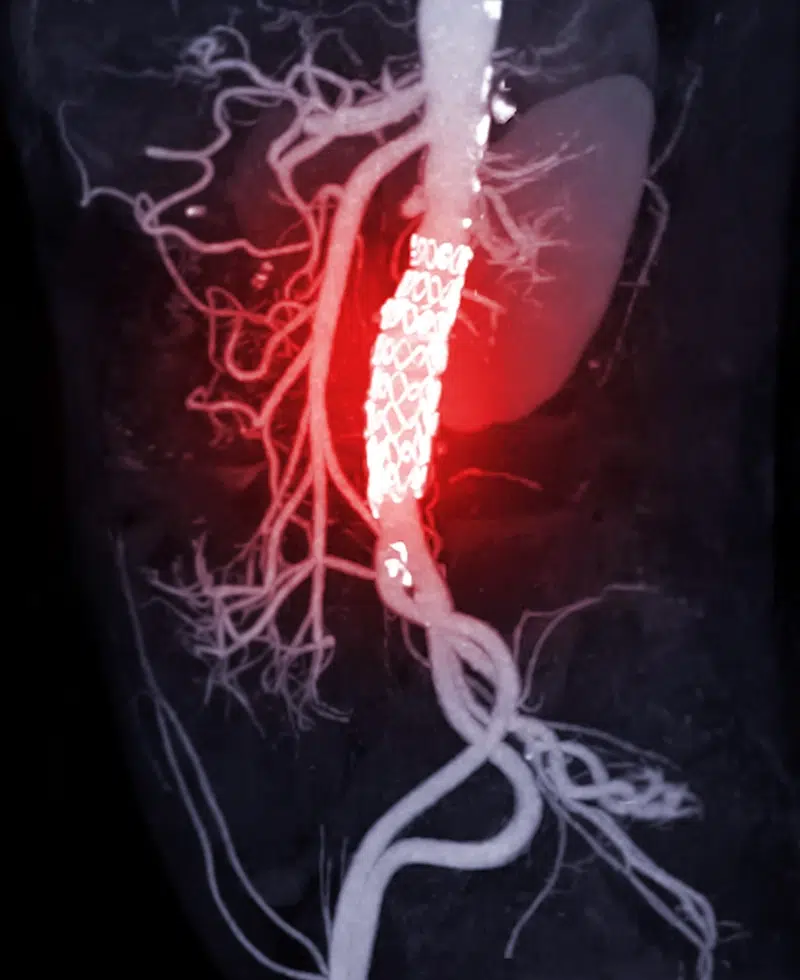
The diagnosis is based on imaging examinations:
- Doppler ultrasound : a first-line examination that is quick and painless;
- CT scan (angio-CT) : allows precise measurement of the aneurysm diameter and planning of surgery;
- Vascular MRI , depending on the specific case.
Dr. Seban determines the frequency of follow-up based on the size of the aneurysm:
- < 4 cm → simple annual monitoring;
- between 4 and 5 cm → semi-annual check;
- between 5 and 5.5 cm → discussion of an intervention
- ≥ 5.5 cm → aortic surgery recommended .
When should surgery for an aortic aneurysm be considered?
An aortic operation is indicated:
- when the aneurysm reaches a critical size (≥ 5 to 5.5 cm);
- when it rapidly increases in volume;
- or when it becomes symptomatic (painful)
The goal is to prevent rupture by strengthening or replacing the weakened portion of the aorta.
Surgical techniques used
Surgical techniques used
Open surgery
Classic technique consisting of replacing the dilated part of the aorta with a synthetic prosthesis (tube made of Dacron or Goretex).
It requires an abdominal or thoracic incision depending on the location of the aneurysm.
Advantage: long-lasting treatment.
Disadvantages: long hospital stay, complications greater than with percutaneous endovascular techniques, risk of bleeding and risk of sexual dysfunction, infections and risk of colon necrosis with permanent pouch.
In all cases, the surgeon determines the patient’s level of risk and proposes the solution best suited to their particular case.
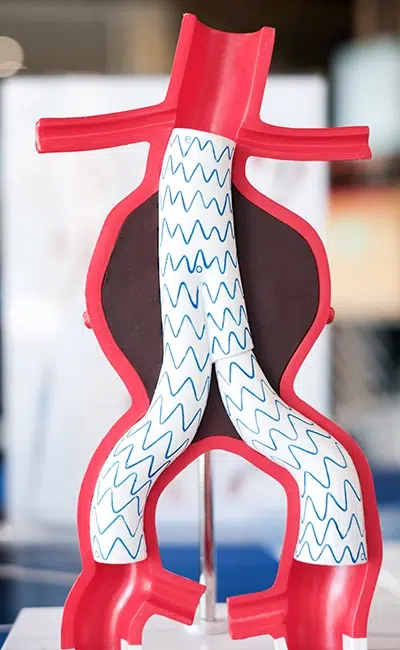
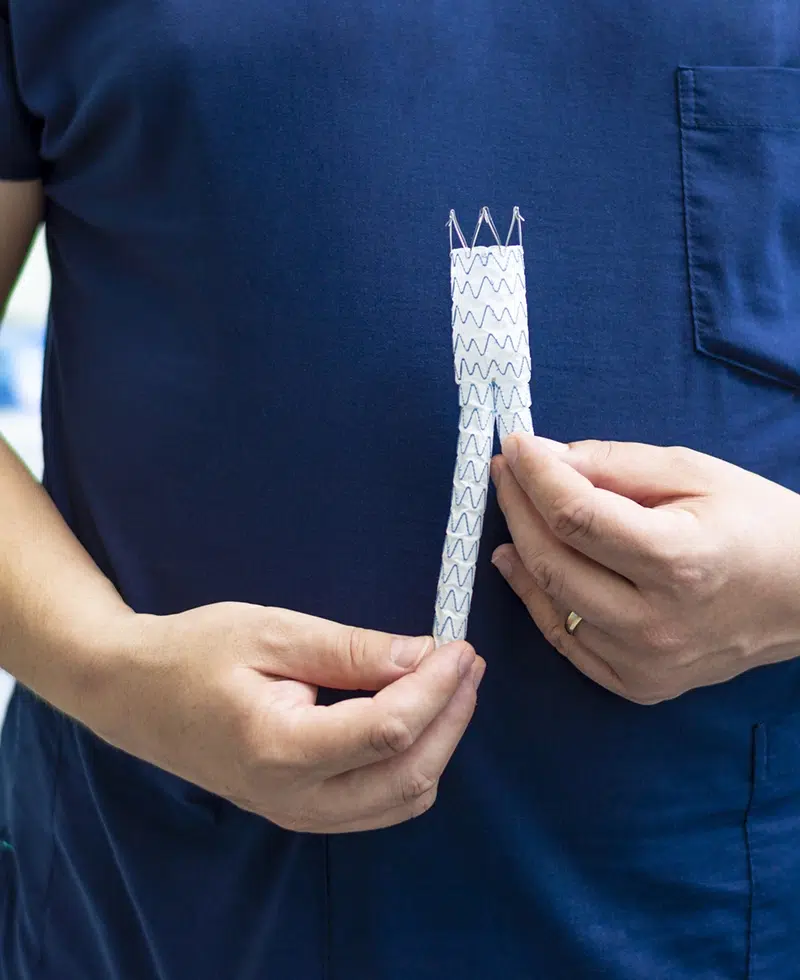
Endovascular surgery (stent placement)
This minimally invasive approach involves inserting an endoprosthesis via the femoral arteries, in order to exclude the aneurysm from circulation (blood circulates in the endoprosthesis but not in the aneurysm. A healthy tube is placed inside the dilated tube)
The procedure is performed under general or regional anesthesia, with a rapid recovery.
Benefits :
- No abdominal opening;
- Short hospital stay (1 to 3 days);
- Rapid recovery and little post-operative pain.
Dr. Seban regularly practices this technique, called EVAR ( EndoVascular Aneurysm Repair ), which is recognized as the reference method for many patients.
Post-operative follow-up
After the procedure:
- Monitoring in a specialized unit for 24 to 48 hours;
- Ultrasound or CT scan at 1 month, then at 6 months;
- Annual follow-up to check the stability of the prosthesis or the operated area. Monitoring of endoprostheses should last 5 years.
Long-term follow-up is essential to ensure the sustainability of the treatment and prevent any complications.


Precision arterial surgery
- based on safety and prevention ,
- supported by the most advanced imaging techniques ,
- and always personalized according to the patient’s profile and history.
📍 Consultations in Annecy , Annemasse and Geneva .
Precision arterial surgery
Dr. Guilhem Seban puts his expertise in vascular and endovascular surgery at the service of each patient, with an approach:
- based on safety and prevention ,
- supported by the most advanced imaging techniques ,
- and always personalized according to the patient’s profile and history.
📍 Consultations in Annecy , Annemasse and Geneva .